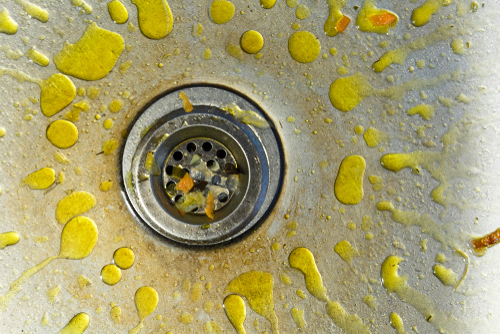
If you are clearing the same drain in your Newark TX home every few weeks, the clog you are removing is not the real problem – it is a symptom of something deeper inside the pipe that a plunger or bottle of drain cleaner will never reach. Newark sits in northwestern Wise County where older residential construction, mineral-heavy water, and mature tree canopy create a triple threat for household drain lines. Understanding why your drains keep clogging is the first step toward a permanent fix, and professional drain cleaning is the only method that addresses the root cause instead of temporarily pushing the blockage further down the line.
Why Newark Drains Clog Repeatedly
Most recurring clogs in Newark homes are caused by one or more of three conditions that store-bought products cannot resolve. The first is mineral scale buildup from hard water. Newark’s water supply carries dissolved calcium and magnesium that coat the interior walls of your drain pipes over years of use. This mineral layer narrows the pipe diameter and creates a rough surface that catches hair, soap, grease, and food particles that would otherwise wash through.
The second is tree root intrusion in the main sewer line. Newark’s established neighborhoods along FM 718, Newark Road, and the streets near Newark Elementary have mature pecan and live oak trees whose roots travel long distances underground seeking the moisture and nutrients inside drain pipes. Roots enter through joint gaps and hairline cracks and grow into dense masses inside the pipe.
The third is aging pipe material. Many Newark homes built in the 1970s through 1990s have galvanized steel or cast iron drain lines that corrode from the inside, creating pitting and rough surfaces that trap debris. As these pipes deteriorate, the interior diameter shrinks and the surface becomes increasingly irregular, making clogs inevitable.
Why Chemical Drain Cleaners Make Newark Drain Problems Worse
Chemical drain cleaners generate heat through a caustic chemical reaction designed to dissolve organic material. In theory, they melt through a clog and restore flow. In practice, they damage your pipes while providing only temporary relief.
The heat from chemical cleaners can soften and warp PVC pipe joints, creating new weak points that will leak or separate. On older metal drain lines – common throughout Newark – the caustic chemicals accelerate corrosion at the exact point of the clog, thinning the pipe wall where it is already compromised. And none of these products dissolve mineral scale or cut through tree roots, which are the actual underlying causes in most Newark drain systems.
If your bathroom sink keeps clogging within weeks of clearing it, or your kitchen sink smells like sewage despite being cleaned regularly, the problem is beyond what any bottle can solve.
What Professional Drain Cleaning Actually Does
Professional drain cleaning uses mechanical methods that physically remove the buildup causing recurring clogs. Hydro-jetting uses high-pressure water – typically 3,000 to 4,000 PSI – to blast mineral scale, grease, and debris off the interior pipe walls, restoring the full diameter of the pipe. Cable machines with cutting heads can shear through tree root masses that have colonized your main sewer line.
Unlike chemical treatments, these methods clean the entire pipe wall surface, not just the point of the current clog. The result is restored flow velocity throughout the drain system, which means the conditions that cause recurring clogs are eliminated rather than temporarily masked.
For Newark homes where the clog source is unclear, a sewer camera inspection before cleaning identifies exactly what is causing the blockage and where it is located. This prevents wasted time and ensures the right cleaning method is used for the specific problem.
How Often Newark Homeowners Should Schedule Cleaning
For homes with hard water and no water softener – which is most of Newark – annual professional drain cleaning prevents the gradual buildup that leads to emergency backups. Kitchen drains in homes without garbage disposals should be cleaned every six months, and main sewer lines on properties with mature trees benefit from twice-yearly cleaning to stay ahead of root regrowth.
If multiple drains in your home are backing up simultaneously, that indicates a main line blockage rather than individual branch clogs, and you should schedule service immediately rather than waiting for your next maintenance interval. Gurgling drains are another sign that buildup has progressed to the point where airflow through the system is restricted.
Stop the Cycle
Recurring drain clogs waste your time, your money, and your patience. SNP Plumbing serves all of Newark and Wise County from our Springtown headquarters with professional drain cleaning that breaks the clog-clear-clog cycle permanently. Your plumber in Newark TX is just a short drive away – contact SNP Plumbing to schedule cleaning before your next backup.
The EPA’s WaterSense program recommends proactive plumbing maintenance as the most cost-effective strategy for preventing plumbing emergencies and reducing water waste in residential homes.