That constant trickle or phantom flush you keep hearing from your Springtown TX bathroom is not just annoying – it is draining your bank account every hour it runs. A single running toilet can waste 200 gallons of water per day, adding $50 to $100 or more to your monthly Springtown water bill depending on the severity of the leak. Multiply that by two or three months of ignoring the problem, and you are looking at hundreds of dollars in wasted water before you even address the repair. Most running toilets are caused by one of four inexpensive components failing inside the tank, but knowing which one – and whether the problem is actually inside the tank at all – determines whether this is a quick DIY fix or a job for a licensed plumber who handles toilet and fixture repair professionally.
Cause 1: The Flapper Has Failed
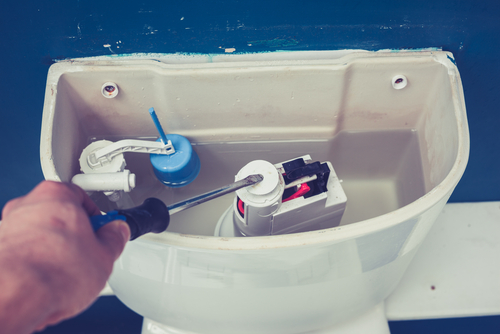
The flapper is the rubber seal at the bottom of your toilet tank that lifts when you flush and drops back down to seal the tank for refilling. Over time – and especially in Springtown’s hard water conditions where mineral deposits roughen every surface they touch – the flapper warps, cracks, or develops mineral buildup on its seating surface that prevents a watertight seal.
When the flapper does not seal completely, water continuously trickles from the tank into the bowl. The fill valve senses the dropping water level and keeps refilling the tank, creating a cycle that never stops. This is the most common cause of a running toilet and the easiest to test: drop a few drops of food coloring into the tank, wait 15 minutes without flushing, and check the bowl. If colored water appears in the bowl, your flapper is leaking.
Cause 2: The Fill Valve Is Sticking or Failing
The fill valve controls how much water enters the tank after a flush. When it sticks, wears out, or develops mineral deposits from Springtown’s hard water, it can run continuously, overfill the tank, or fail to shut off completely. You will hear a constant hissing or running sound from the valve, and water may be trickling down the overflow tube inside the tank at all times.
Fill valve replacement is a moderate DIY project for handy homeowners, but if you are not comfortable shutting off the water supply, disconnecting the supply line, and adjusting the new valve height, a professional replacement ensures the job is done correctly and eliminates the risk of a supply line leak from an improperly tightened connection.
Cause 3: The Float Is Set Too High
Every toilet tank has a float mechanism – either a ball float on an arm or an integrated float on the fill valve – that tells the fill valve when to stop adding water. If the float is set too high, the tank overfills and water continuously runs down the overflow tube into the bowl. This is technically not a leak, but it wastes water at the same rate.
Adjusting the float is usually as simple as turning a screw or bending a float arm, but on Springtown homes with older toilet models, the adjustment mechanism can be corroded or frozen in place from mineral deposits, making it a job for a pro.
Cause 4: The Problem Is Below the Tank
Not every running toilet is caused by a tank component. If the wax ring seal between the toilet base and the floor flange has failed, water can seep around the base of the toilet with every flush, saturating the subfloor and creating conditions for mold growth and structural damage. This is a more serious repair that requires removing the toilet, replacing the wax ring, and resetting the fixture – absolutely a licensed plumber job.
If you notice water pooling around the base of your toilet, a rocking or wobbling toilet, or a sewage smell coming from the bathroom floor, the wax ring is the likely culprit and should be addressed immediately before it damages your subfloor.
What a Running Toilet Is Really Costing You
Beyond the wasted water, a continuously running toilet puts unnecessary load on your Springtown home’s plumbing system. The fill valve cycles constantly, wearing out faster and increasing the likelihood of a supply line failure at the valve connection. Your water bill climbs month over month while you assume the increase is from seasonal usage. And if the running water is caused by a wax ring failure rather than a tank component, the subfloor damage underneath is accumulating silently.
The EPA estimates that household leaks waste nearly one trillion gallons of water annually in the United States, and running toilets are one of the largest single contributors to residential water waste.
When to Call a Springtown Plumber
If the flapper, fill valve, and float all appear to be functioning correctly but the toilet still runs, the problem may be a cracked overflow tube, a warped flush valve seat, or internal tank damage that requires professional diagnosis. If you have multiple plumbing fixtures in your Springtown home showing issues simultaneously, it may indicate a broader pressure or supply problem rather than isolated toilet components.
SNP Plumbing handles residential plumbing repair across Springtown and all of Parker County. Contact us to schedule a repair before that trickle turns into another month of wasted water and inflated bills.