Quick Answer: If your kitchen sink is full of standing water, do not pour chemical drain cleaner into it. First, try a sink plunger (flat-bottom type) with firm, steady pumping for 30 seconds. If that does not work, place a bucket under the P-trap, remove the trap, and clear the blockage manually. If the clog is deeper in the branch line past the trap, you need a plumber with a cable machine or hydro-jetter.
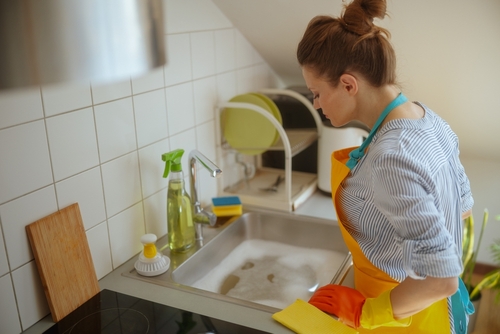
A kitchen sink that is completely backed up with standing water is more than an inconvenience. It is a health issue. That stagnant water is full of food particles, grease, and bacteria, and every hour it sits there, the smell gets worse and the risk of overflow increases if anyone accidentally bumps the faucet handle. You need to get the water moving, but the method matters. The wrong approach can make the situation worse or damage your drain system.
What NOT to Do First
Do not pour chemical drain cleaner into a sink full of standing water. These products are designed to work in a mostly empty drain where the chemical can contact the blockage directly. Dumped into a full sink, the caustic liquid dilutes in the standing water, sits in your pipes without reaching the clog at full strength, and creates a dangerous chemical pool that you now have to deal with before you can work on the drain manually.
If you later need to remove the P-trap to clear the clog by hand, that trap will be full of toxic drain cleaner mixed with dirty water. It will burn your skin and damage anything it splashes on. Skip the chemicals entirely.
Method 1: Flat-Bottom Sink Plunger
You need a flat-bottom plunger (also called a cup plunger), not the flanged toilet plunger. If you have a double-bowl sink, plug the opposite drain with a wet rag or stopper to prevent pressure from escaping through the other side. Press the plunger flat against the drain opening, making sure it seals completely, and pump firmly 15 to 20 times. Pull the plunger away quickly on the last stroke to create suction.
If the water begins draining, run hot water for two full minutes to flush loosened debris through the line. If the water does not move after three rounds of plunging, the blockage is too solid or too deep for a plunger to reach.
Method 2: Remove and Clean the P-Trap
Place a bucket directly under the curved P-trap pipe beneath the sink. Loosen the slip nuts on both ends of the trap by hand or with channel-lock pliers (turn counterclockwise). The standing water will drain into the bucket along with whatever is clogging the trap.
In most kitchen sink clogs, this is where you find the culprit: a packed mass of grease, food particles, and sometimes utensils or debris that slipped past the drain screen. Clean the trap thoroughly, reassemble, and run water to test. If the sink drains freely, you are done.
If water still backs up after reinstalling a clean P-trap, the blockage is further down the line, in the branch drain that runs inside the wall or under the floor to the main sewer pipe.
Method 3: Call a Professional
When the clog is past the P-trap and inside the wall or branch line, you need professional equipment. A plumber’s cable machine (also called a drain snake) feeds a rotating cable with a cutting head through the drain line to physically break through the blockage. For grease-based clogs that coat the interior of the pipe rather than forming a solid plug, professional hydro-jetting uses high-pressure water to scour the pipe walls clean and restore full diameter flow.
If your kitchen sink is clogging repeatedly every few weeks, the issue is likely mineral scale narrowing the pipe combined with grease accumulation on that rough surface. In hard water areas like Parker County, this is extremely common. One-time clogs get cleared. Recurring clogs need the pipe walls cleaned with hydro-jetting to break the cycle.
Preventing Kitchen Sink Clogs
Never pour cooking grease, oil, or fat down the kitchen drain. Even running hot water while you pour does not prevent grease from solidifying further down the line where the water cools. Wipe greasy pans with a paper towel before washing. Use a mesh drain screen to catch food particles. Run cold water for 15 seconds after using the garbage disposal to flush debris completely through the trap and into the branch line.
If your kitchen sink shares a drain line with a dishwasher, make sure the dishwasher drain hose has a proper high loop or air gap to prevent backflow. A sewage smell from the sink after running the dishwasher often indicates a missing high loop or a partial blockage where food debris from the dishwasher is accumulating.
SNP Plumbing clears kitchen drain clogs across Springtown, Weatherford, Newark, and all service areas. Contact us for same-day drain service.
FAQ
Q: Can boiling water unclog a kitchen sink? A: Boiling water can sometimes dissolve a fresh grease clog in a metal drain. However, do NOT pour boiling water into a sink with PVC drain connections (white plastic pipes). PVC joints are rated for a maximum of 140 degrees Fahrenheit, and boiling water at 212 degrees can soften joints and cause leaks. If you have PVC drains, use hot tap water instead.
Q: Why does my kitchen sink clog but not the bathroom sink? A: Kitchen drains handle grease, food particles, soap, and significantly higher water volume than bathroom sinks. The combination of grease solidifying inside the pipe and food debris catching on that grease layer creates blockages that bathroom drains rarely experience. Kitchen drains also tend to have longer horizontal runs inside walls, giving grease more pipe surface to coat.
Q: Is it safe to plunge a kitchen sink with a garbage disposal? A: Yes, but never reach into the disposal while plunging and never turn on the disposal while a plunger is in the drain. Plunge the opposite side of a double-bowl sink first if the disposal side is backed up. If plunging does not clear the clog and you suspect the disposal itself is jammed, that is a separate issue from a drain clog.
Q: How do I know if the clog is in the P-trap or further down? A: Remove the P-trap and pour water directly into the drain pipe coming out of the wall. If water flows freely into the wall pipe with no backup, the clog was in the trap. If water backs up immediately out of the wall pipe, the blockage is deeper in the branch or main drain and requires a plumber with a cable machine.