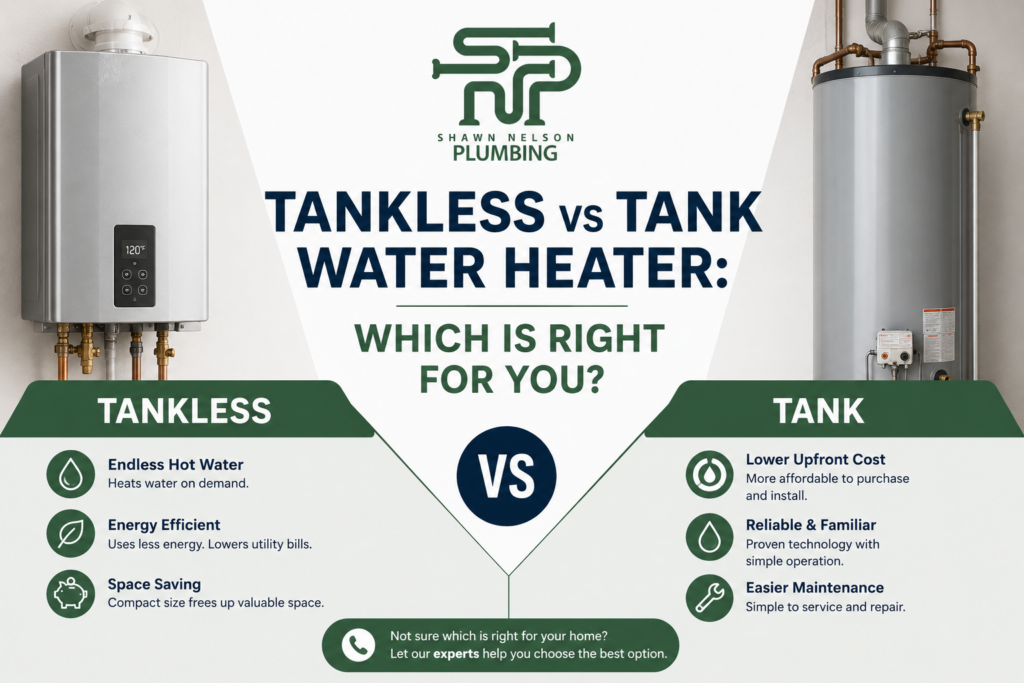
A tank water heater costs less up front and is simpler to replace. A tankless unit costs more initially but lasts longer, saves space, and never runs out of hot water. The right choice depends on your home, your usage, and how long you plan to stay.
If your water heater is nearing the end of its life, you have a decision to make before you replace it: stick with a traditional tank, or switch to tankless. Both have real advantages, and the best answer is different for different homes. Here is a straight comparison to help you decide before you are forced into a rushed choice by a failed unit.
How they differ
A traditional water heater keeps a tank of water hot around the clock so it is ready when you need it. A tankless unit heats water on demand as it flows through the unit, which means it only uses energy when you are actually drawing hot water, and it never empties out the way a tank can.
Tank water heater: the case for it
- Lower up-front cost for both the unit and the installation.
- Simpler replacement when you are swapping out an existing tank.
- Proven and familiar with straightforward maintenance.
The tradeoffs are a shorter lifespan, typically eight to twelve years, higher standby energy use from keeping water hot constantly, and the fact that a heavy-use morning can drain the tank and leave the last person with a cold shower.
Tankless water heater: the case for it
- Endless hot water, since it heats on demand and never runs out.
- Longer lifespan, often twenty years or more with maintenance.
- Lower energy use, because it is not paying to keep a tank hot all day.
- Space savings, since the unit is wall-mounted and compact.
The tradeoffs are a higher up-front cost and a more involved installation. In a hard water area like Parker County, a tankless unit also benefits from periodic descaling to keep mineral buildup from shortening its life.
How to decide
If you are on a tight budget, replacing an existing tank, or not planning to stay in the home long, a tank unit usually makes sense. If you want long-term energy savings, hate running out of hot water, plan to stay put, or want to reclaim the floor space, tankless often pays off over time. Either way, hard water is a factor here, so whichever you choose, maintenance matters. When you are ready to compare options for your specific home, our water heater repair and replacement service can walk you through it.
Frequently asked questions
Is a tankless water heater worth the extra cost?
For homeowners who plan to stay in their home for years, the longer lifespan and lower energy use often offset the higher up-front cost over time. For a short stay or a tight budget, a tank unit is usually the better value.
Does hard water affect tankless water heaters?
Yes. Hard water, common across Parker County, causes scale buildup inside a tankless unit, so periodic descaling is important to protect its lifespan.
How long does each type last?
A traditional tank water heater typically lasts eight to twelve years, while a well-maintained tankless unit can last twenty years or more.
Replacing a water heater near Springtown? Get honest advice.
Whether tank or tankless is right for your home depends on the details. SNP Plumbing will give you a straight comparison instead of pushing the priciest option.
Call now: (817) 487-8866