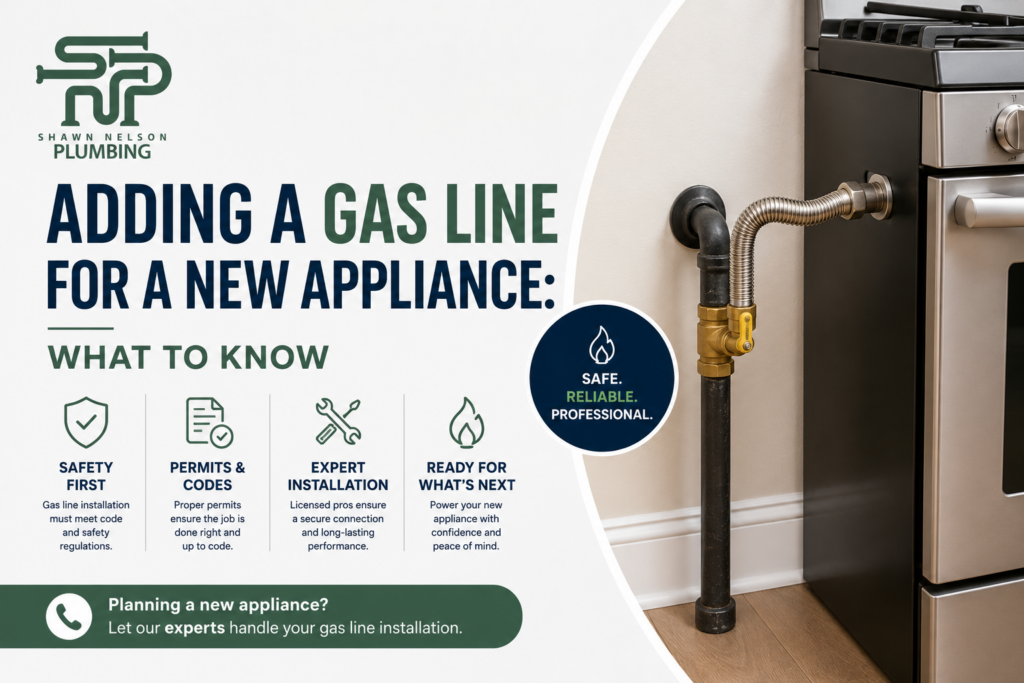
Adding a gas line for a new range, water heater, generator, or outdoor kitchen is a job for a licensed plumber, not a DIY project. The line has to be correctly sized, properly connected, and pressure tested to code before it is safe to use.
Maybe you are upgrading to a gas range, adding a standby generator, or building an outdoor kitchen. Whatever the appliance, running a new gas line is one of the most regulated jobs in the home for good reason. Done wrong, it is a serious hazard. Here is what homeowners around Springtown and Parker County should understand before adding a gas line.
Why this is not a DIY job
In Texas, gas line work must be performed by a licensed plumber. This is not red tape for its own sake. An undersized line, a loose fitting, or a connection that was never pressure tested can leak gas, and a gas leak is a fire, explosion, and health risk all at once. An improper installation can also void your homeowners insurance. SNP Plumbing holds Texas Master Plumber License RMP-37425, and a licensed plumber handles every gas job.
What goes into a proper installation
- Sizing the line correctly so the new appliance gets the gas volume it needs without starving your existing appliances.
- Checking the supply, since adding a major appliance can mean your meter or main line needs evaluating.
- Routing the line safely through walls, floors, or underground to the appliance location.
- Making code-compliant connections with the right materials and shutoffs.
- Pressure testing the line to confirm it holds before any gas flows through it.
Common appliances that need a new line
The most frequent requests are gas ranges and cooktops, gas water heaters, gas dryers, standby generators, pool and spa heaters, fireplaces, and outdoor kitchens or fire features. Each has different demands. A standby generator or an outdoor kitchen pulls far more gas than a single range, which is exactly why sizing the line to the specific appliance matters so much.
A note on older homes and acreage
On older Parker County homes and rural properties, adding a gas line sometimes reveals that the existing supply or piping needs attention first. Aging black iron pipe, an undersized main, or a line stressed by shifting clay soil can all affect whether your system can support a new appliance. A licensed plumber evaluates the whole system, not just the new run. If you ever suspect a problem with your existing gas lines, see our gas line repair service.
Frequently asked questions
Can I install a gas line myself?
No. Texas law requires gas line work to be done by a licensed plumber. Beyond the legal requirement, an improper gas line is a serious safety hazard and can void your homeowners insurance.
How long does it take to add a gas line?
It depends on the distance to the appliance, the routing, and whether the existing supply needs upgrading. A plumber can give you a timeline after evaluating the job.
Will adding an appliance affect my other gas appliances?
It can if the line is not sized properly. A correctly sized installation ensures the new appliance gets the gas it needs without starving your existing appliances, which is part of why professional sizing matters.
Planning a new gas appliance in the Springtown area?
From a gas range to a whole outdoor kitchen, SNP Plumbing installs gas lines safely and to code, with a licensed master plumber on every job.
Call now: (817) 487-8866