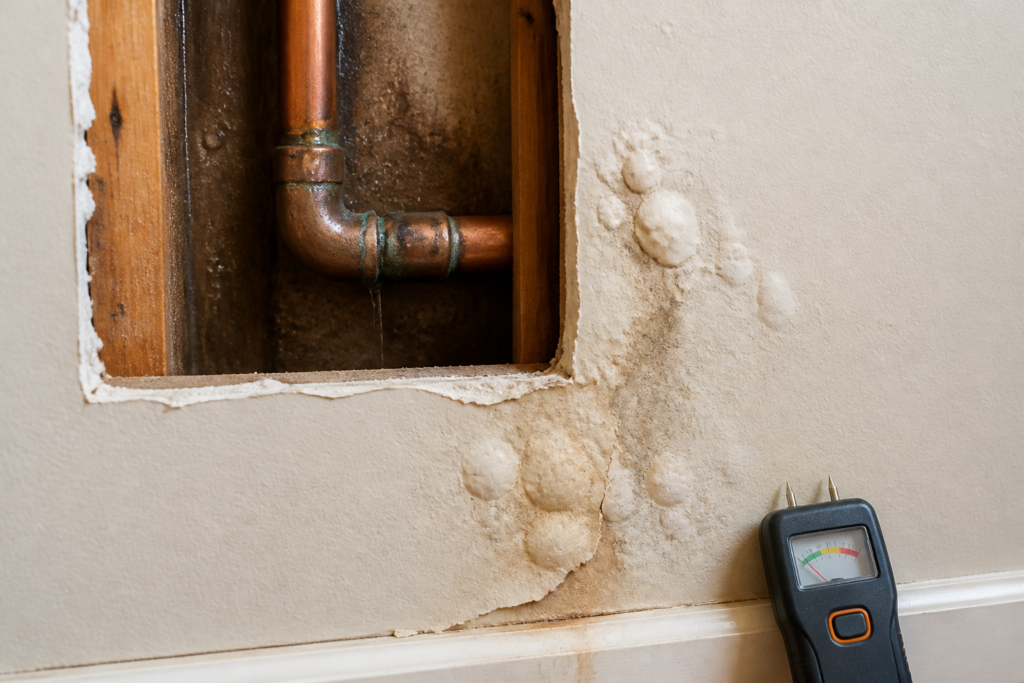
Paint can bubble, blister, or peel when moisture gets between the paint and the wall surface. If the damage does not follow rain and there is no apparent roof leak, the moisture may be coming from a pressurized water line, a drain connection, a nearby fixture, or condensation inside the wall. Paint damage alone cannot identify which source is responsible, but its location and timing can help a plumber narrow the investigation.
Do not simply scrape and repaint the damaged area. Covering it may hide the stain temporarily, but the new finish can fail again if the wall remains damp. The priority is to determine whether moisture is still entering the wall, stop the source, and let the affected materials dry before restoring the surface.
Why Moisture Makes Interior Paint Bubble
Paint adheres best to a clean, dry, stable surface. When drywall, plaster, or another wall material becomes damp, moisture can weaken that bond. Water vapor may also become trapped beneath a less permeable paint layer. As pressure develops or the surface softens, the coating can swell into bubbles or separate in flakes.
The visible damage may be smaller than the damp area behind it. Moisture can travel along framing, pipes, fasteners, seams, or the paper facing on drywall before it reaches the painted side. A bubble near the baseboard does not always mean the source is directly behind that spot. Water may have entered higher or farther away and followed an easier path downward.
Poor paint preparation can also cause peeling, so bubbling is not proof of a plumbing leak by itself. However, a soft wall, spreading stain, musty odor, recurring damage, or paint that feels damp deserves prompt investigation.
A Pressurized Supply Line May Leak When No Fixture Is Running
Water supply pipes remain under pressure while the plumbing system is active. A loose fitting, pinhole opening, damaged connection, or failing valve can therefore release water without anyone using a sink, shower, toilet, or appliance.
A supply leak may create dampness that persists throughout the day. The bubble can grow between fixture uses, and the wall may remain cool or wet rather than drying. Depending on the size and location of the opening, homeowners may also notice reduced pressure, the sound of water in a quiet house, or unexplained water use.
Not every supply leak produces obvious dripping. A small amount can soak into insulation or framing and spread gradually. A review of the common causes of high water bills can help you compare wall damage with broader signs of unintended water use. A normal bill does not rule out a small or intermittent leak.
A Drain Leak Usually Follows Water Use
Drain pipes are generally not pressurized in the same way as supply lines. They carry wastewater when a connected fixture is used. A loose joint, cracked fitting, damaged pipe, or leaking trap connection may therefore wet a wall only when water passes through that section of the drainage system.
Timing is especially useful here. If the paint darkens or the bubble becomes softer after a shower, bath, sink, dishwasher, or washing-machine cycle, the pattern may point toward a drain or fixture connection associated with that use. The dampness may appear several minutes later because water needs time to travel through the wall materials.
Avoid repeatedly running a suspected fixture just to make the damage more obvious. A brief observation may provide useful information, but continued testing can add water to the wall and increase damage. Stop using the fixture if use clearly makes the condition worse.
Water Can Escape Around a Fixture Without a Broken Pipe
Water does not have to come through a failed pipe. It can escape around a tub, shower enclosure, sink, toilet, appliance connection, or wall-mounted fixture and then enter an opening at the floor or wall.
Possible paths include a failed seal, loose supply connection, leaking overflow assembly, damaged shower-door seal, or water escaping outside a wet area during normal use. Grout and caulk are not substitutes for the waterproofing behind a shower, but visible gaps can still provide a path for surface water.
A bubble on the opposite side of a bathroom wall may be related to water leaving the fixture area rather than a pipe leaking inside the wall. The difference matters because the repair could involve a fixture connection, enclosure detail, or plumbing component. SNP Plumbing’s residential plumbing services cover household fixtures and plumbing systems that may need to be evaluated together.
Condensation Can Wet a Wall Without a Pipe Leak
Condensation forms when humid air contacts a sufficiently cold surface. A cold-water pipe, air-conditioning component, or poorly insulated duct inside a wall can collect moisture under the right conditions. Repeated condensation may dampen insulation, drywall, or paint even when the pipe itself is intact.
This possibility may fit damage that changes with indoor humidity, cooling-system operation, or seasonal conditions rather than with a particular fixture. Condensation can also affect a broader area instead of creating one concentrated wet point.
The presence of condensation does not identify why it is occurring. Damaged insulation, uncontrolled indoor humidity, air leakage, or a cold plumbing surface may contribute. A plumber can determine whether the moisture is associated with plumbing, while an HVAC or building specialist may be appropriate if the evidence points elsewhere.
Location and Timing Provide Better Clues Than the Paint Shape
A bubble’s appearance cannot reliably identify a source, but several observations can help narrow the possibilities:
- Damage that grows while all fixtures are idle may be more consistent with a supply-side leak or another continuous moisture source.
- Damage that appears after one specific fixture is used may point toward its drain, overflow, seal, or nearby connection.
- A wet area below a bathroom, laundry space, kitchen, or water heater may relate to plumbing above or behind it.
- Bubbling near the floor may result from water traveling down framing or collecting at the bottom of a wall.
- A cool, diffuse damp area that changes with cooling-system use or humidity may be consistent with condensation.
- Damage after rain still leaves an exterior or roof-related route possible, even if the visible spot is far from the roof.
These patterns are clues, not a remote diagnosis. Multiple moisture sources can produce similar stains, and water can travel away from its entry point.
Safe Observations to Make Before Calling
You can gather useful information without cutting drywall or dismantling plumbing. Note when the paint first changed, whether the affected area is expanding, and which fixtures or appliances were used beforehand.
Keep observations simple and non-destructive:
- Photograph the area from the same position so changes are easier to compare.
- Note whether the wall feels dry, cool, soft, or damp without pressing hard enough to break the surface.
- Record whether the damage changes after a shower, sink use, toilet flush, laundry cycle, or dishwasher cycle.
- Look for visible water at accessible supply hoses, shutoff valves, fixture edges, cabinet floors, and appliance connections.
- Listen for water movement when the home is quiet, but do not open walls to follow the sound.
- Check for other clues such as an unexplained bill increase, reduced pressure, musty odor, or staining on the opposite side of the wall.
- Avoid the affected fixture if using it clearly causes the bubble or stain to grow.
A water meter may help establish whether water is moving when normal fixtures are off, but that observation does not reveal the leak’s location. If meter movement suggests water loss but the interior moisture does not explain it, information about how professionals locate underground water leaks can help distinguish an interior-wall concern from a service-line or yard leak.
Do not force a corroded valve or operate a shutoff that appears damaged. If active water is spreading and the main shutoff is known, accessible, and safe to use, shutting off the water may limit damage. Otherwise, stay clear and request assistance.
Treat Wet Electrical Areas as a Safety Hazard
Water near an outlet, switch, light fixture, appliance connection, electrical panel, or exposed wiring can create a shock and fire hazard. Do not touch wet electrical devices, pull plugs from a damp outlet, or enter standing water to reach a switch.
Keep people and pets away from the area. If electrical equipment may be affected, contact the appropriate emergency service or a qualified electrician from a dry, safe location. Do not remove outlet covers or open the wall to inspect wiring.
A strong musty odor, visible fungal growth, or a wall that has remained wet also deserves caution. Avoid scraping, sanding, drilling, or pulling apart damp materials, because disturbance can spread particles and expose a larger affected area. Plumbing repairs stop the water source; drying, material removal, and environmental remediation may require separate qualified professionals depending on what is found.
Why Cutting Open the Wall First Can Make the Problem Harder
Opening a wall before narrowing the likely source can damage finishes without revealing the leak. The visible paint bubble may be several feet from the point where water entered. A random opening can also disturb wiring, pipes, contaminated materials, or hidden microbial growth.
Applying caulk broadly, tightening concealed fittings through a small opening, or pouring leak-stopping products into plumbing can mask symptoms or create additional problems. Repainting before the wall is dry may trap moisture and cause another coating failure.
Professional water leak detection in Springtown begins by comparing the moisture pattern with the plumbing layout and your observations. That comparison narrows the probable source before access or repair is recommended.
How Non-Destructive Leak Detection Can Narrow the Source
A plumber may begin with visual inspection of accessible fixtures, valves, supply connections, drains, and adjacent rooms. Moisture readings can help map where building materials are wet instead of relying on the edge of a visible stain.
Thermal imaging may reveal temperature differences associated with moisture, a cold pipe, or evaporation. It does not see through walls or prove that a particular pipe is leaking, so the results must be interpreted with other evidence.
Depending on the plumbing system and suspected source, additional checks may include pressure testing, fixture isolation, controlled drain testing, acoustic listening, or inspection of accessible connections. A plumber may compare what happens when a fixture is used with what happens when the plumbing remains idle.
No single method fits every wall or every leak. Tile, insulation, framing, pipe material, the size of the leak, and the route water has traveled can affect the findings. Non-destructive testing may substantially narrow the search, but a small, targeted opening can still be necessary to confirm and repair the exact source.
Restore the Wall Only After the Moisture Source Is Resolved
Finding the wet area is only one part of the work. The source must be repaired or otherwise corrected, and the affected cavity and finishes must be evaluated for drying.
Drywall that has softened, crumbled, sagged, delaminated, or developed contamination may require removal rather than repainting. Sound materials may still need sufficient drying before primer and paint are applied. Restoring the finish too soon can trap moisture or allow bubbling to return.
The appropriate sequence is usually to stop the source, verify that water is no longer entering, assess the affected materials, dry the area, and then complete surface repairs. The exact work depends on whether the cause is a supply pipe, drain, fixture, condensation condition, or a non-plumbing source.
When to Contact a Plumber
Request help promptly if the bubble is growing, the wall is soft or actively wet, a fixture makes the damage worse, water use is unexplained, or the source remains uncertain. Avoid using an obviously related fixture until it has been evaluated.
When you contact SNP Plumbing, share the location of the damage, when it changes, what plumbing is nearby, and whether any fixture use seems connected. Those details can help focus the initial inspection while keeping the final conclusion tied to evidence found at the home.