A hidden water leak inside your Newark TX home can silently destroy your foundation, grow mold behind walls, and add hundreds to your water bill every month – all without a single visible drip. Newark’s position in Wise County means the same reactive clay soil and seasonal moisture swings that affect homes throughout North Texas put constant stress on underground water lines and slab-embedded pipe. When these pipes develop pinhole leaks or cracked joints, the water has nowhere to go but into the soil beneath your foundation, and the damage compounds daily. Professional water leak detection locates these hidden failures without invasive demolition, saving you thousands in unnecessary repair costs.
The Meter Test Every Newark Homeowner Should Know
Before calling a plumber, you can confirm a hidden leak exists with a simple test that takes five minutes. Turn off every water-using fixture and appliance in your home – every faucet, toilet, washing machine, dishwasher, ice maker, and irrigation system. Then walk to your water meter and watch the flow indicator. On most meters, this is a small triangle or dial on the face. If it is still moving with everything in your home turned off, water is flowing somewhere it should not be.
Write down the meter reading, then check again in two hours without using any water. If the reading has changed, you have a confirmed leak. This test does not tell you where the leak is, but it eliminates doubt about whether one exists.
If your water bill has spiked without any change in usage habits, a hidden leak is the most likely explanation, and the meter test is the fastest way to confirm it.
Warning Signs Inside Your Newark Home
Hidden leaks send subtle signals before they cause visible damage. Warm or hot spots on tile or concrete floors – especially in bathrooms, kitchens, and laundry rooms – indicate a hot water line leak beneath the slab. The leaking water heats the concrete above it, creating a temperature difference you can feel with bare feet.
The sound of running water when no fixtures are in use is another reliable indicator. Stand in your quietest room at night and listen. If you hear a faint hiss, trickle, or low rumble coming from the walls or floor, pressurized water is escaping through a crack or failed joint somewhere in your supply lines.
Mold or mildew smell in rooms without obvious moisture sources – particularly closets, under sinks, and near baseboards – suggests water is saturating drywall, insulation, or subfloor material behind finished surfaces. By the time you see visible mold, the leak has typically been active for weeks or months.
Warning Signs Outside Your Home
For Newark properties where the water line runs a significant distance from the meter to the house – common on larger lots along FM 718 and the rural roads north of town – outdoor signs can reveal a leak before indoor symptoms appear. Unexplained wet areas, muddy patches, or standing water along the path of your buried water line indicate a supply line failure. Unusually green or fast-growing grass in a line or patch above the pipe path is another telltale sign – the leaking water fertilizes the soil above.
Our guide on how to locate water leaks underground covers the full diagnostic process for buried line leaks on both urban and rural properties.
How Professional Detection Pinpoints the Leak
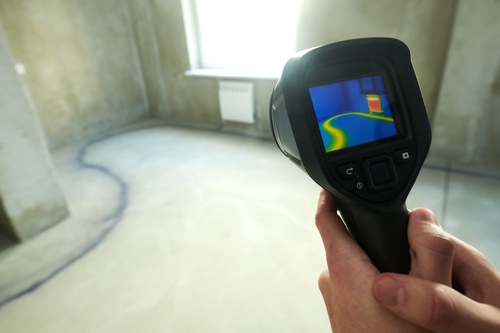
Modern leak detection uses three primary technologies to find hidden leaks without tearing into walls or breaking up your slab. Acoustic listening equipment amplifies the sound of pressurized water escaping through a pipe failure, allowing a trained technician to narrow the location from room level to within inches. Thermal imaging cameras detect temperature differences on floor and wall surfaces caused by water saturating materials behind the finish layer. Electronic line tracing identifies the exact path of buried pipes so the technician knows precisely where to listen and scan.
For slab leaks, this combination of technologies pinpoints the failure location accurately enough that repair requires only a small access opening – not a full slab demolition. The slab leak detection process is especially important in North Texas where clay soil movement creates ongoing stress on slab-embedded pipe.
Repair Decisions After Detection
Once the leak is located, your plumber presents repair options based on the pipe material, depth, accessibility, and failure history. A single isolated leak on a copper or PEX line can be repaired through a targeted access point. If the leak is on a galvanized steel line – common in Newark homes built before the 1990s – the corrosion that caused the failure exists throughout the pipe, and full water line replacement is the long-term solution.
Your plumber in Newark TX at SNP Plumbing provides same-day leak detection service across Wise County. Contact SNP Plumbing to schedule detection before a hidden drip becomes a foundation disaster.
The American Red Cross recommends all homeowners know the location of their main water shutoff valve and test it annually to ensure it operates correctly in an emergency.