Most Boyd TX homeowners do not think about their water heater until the morning they step into an ice-cold shower. But water heaters rarely fail without warning – they send clear signals for weeks or months before a full breakdown. Catching these signals early gives you time to schedule a repair or planned replacement on your terms instead of paying emergency rates for a same-day swap. Whether your Boyd home runs a traditional tank or a tankless water heater, knowing what to watch for protects your comfort and your wallet.
Sign 1: Your Hot Water Runs Out Faster Than It Used To
If you used to get through two back-to-back showers without an issue and now the second person gets lukewarm water halfway through, sediment buildup inside the tank is the most likely cause. Boyd’s water supply – whether from the city system or a private well – carries dissolved minerals that settle to the bottom of the tank over time, displacing usable water volume. A 50-gallon tank with 8 gallons of hardened sediment on the floor is functionally a 42-gallon tank. Our detailed guide on why your hot water runs out fast walks through every possible cause and what to do about each one.
Sign 2: Strange Noises During Heating Cycles
Popping, cracking, rumbling, or banging sounds coming from your water heater during a heating cycle are not normal. These sounds are caused by steam bubbles forming underneath a layer of hardened sediment on the tank floor. The trapped bubbles expand and collapse violently as they work through the sediment, and that is the noise you hear. Beyond being annoying, this process overheats the tank floor and accelerates metal fatigue that leads to leaks.
Sign 3: Rusty or Discolored Hot Water
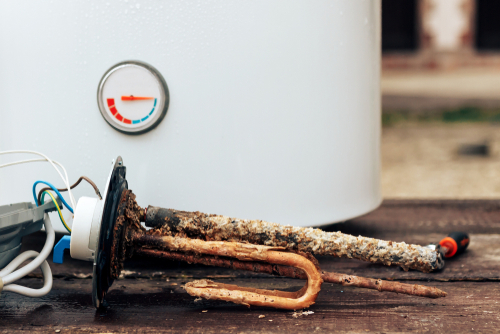
If rusty, brown, or orange-tinted water comes exclusively from your hot water taps – not the cold side – the corrosion is inside your water heater tank, not in your supply lines. This means the anode rod has been consumed and the tank lining is corroding directly. Once internal corrosion reaches this stage, tank failure and leaking are typically weeks to months away. If you notice water pooling around your water heater, the corrosion has already breached the tank wall.
Sign 4: The Pilot Light Keeps Going Out
On gas water heaters, a pilot light that repeatedly goes out can indicate a failing thermocouple, a dirty pilot assembly, or a draft issue in the combustion chamber. While a single pilot light outage can happen for harmless reasons, repeated failures are a sign that a component is deteriorating and the unit needs professional diagnosis. Ignoring this issue risks carbon monoxide exposure if the gas valve or venting system is compromised.
Sign 5: The TPR Valve Is Leaking or Popping
The temperature and pressure relief valve on the side of your water heater is a critical safety device. If it is dripping, weeping, or periodically discharging water, the tank is generating excessive pressure or temperature – both dangerous conditions. Our guide on testing your water heater TPR valve explains how this valve works and what a malfunction means for your safety. A faulty thermostat is one of the most common causes of TPR valve issues and should be inspected by a licensed plumber immediately.
Sign 6: The Unit Is More Than 10 Years Old
Tank water heaters have a functional lifespan of 8 to 12 years under normal conditions. In Boyd and throughout Wise County, where hard water and well water conditions accelerate sediment damage, that window shortens to 6 to 9 years for units that have not received regular maintenance. If your water heater is approaching or past the 10-year mark and showing any of the symptoms above, replacement is more cost-effective than continued repair.
The U.S. Department of Energy provides efficiency ratings and lifespan data that can help Boyd homeowners evaluate whether repair or replacement makes more financial sense for their specific unit.
What Boyd Homeowners Should Do Next
If you recognize any of these signs, schedule an inspection with a licensed plumber before the unit fails completely. SNP Plumbing serves Boyd and all of Wise County from our Springtown headquarters, just minutes away. A professional evaluation includes checking the anode rod condition, flushing accumulated sediment, testing the TPR valve and thermostat, and inspecting all gas connections and venting.
If cold weather has been affecting your hot water performance, that adds additional stress to an already aging unit and makes inspection even more urgent.
Your plumber in Boyd TX is ready to help – contact SNP Plumbing to schedule a water heater inspection or replacement consultation today.
Related reading: Weighing repair against replacement? See our water heater replacement cost guide for Azle, TX.