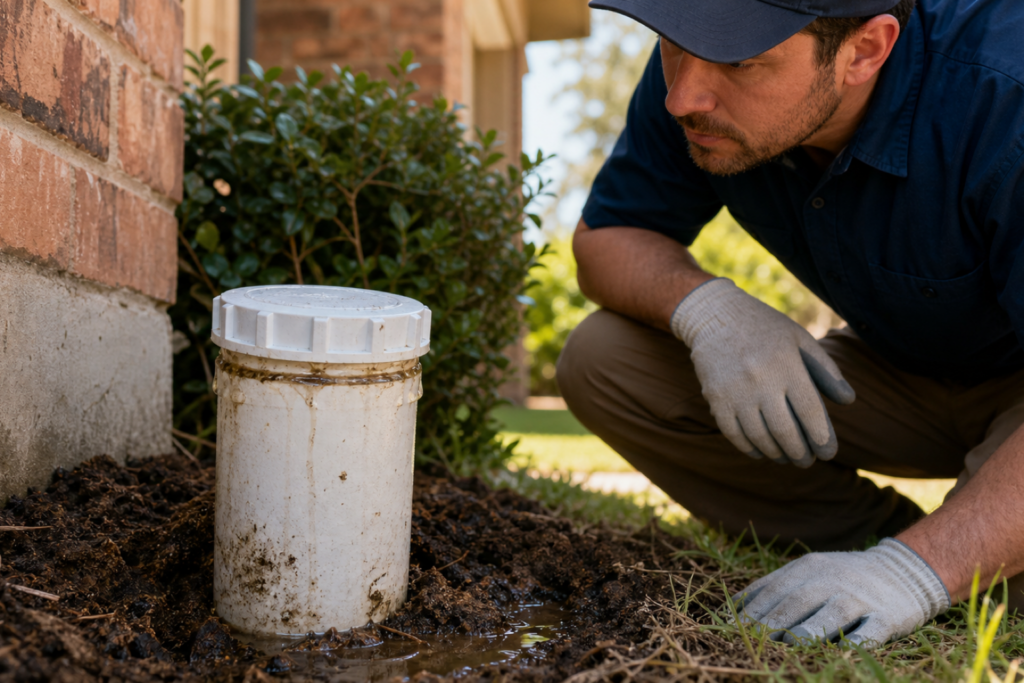
Water leaking around a closed sewer cleanout can mean wastewater is rising behind a restriction and escaping through a weak point at the cap or fitting. It can also come from damaged cap threads, a cracked riser, a failed fitting, or rain and irrigation collecting around the pipe. Moisture alone cannot identify the cause.
Do not loosen or remove the cleanout cap to check inside. If wastewater is held behind it, opening the cap can release more liquid and expose you to contaminated material. Reduce water use, keep people and pets away from the wet area, and arrange a plumbing evaluation if the seep continues, returns when fixtures are used, smells like sewage from a safe distance, or appears with slow or backing-up drains.
What a Sewer Cleanout Does
A sewer cleanout is a capped access point connected to a building drain or sewer line. A plumber may use the access for inspection or clearing when conditions allow. The cap is meant to remain closed between service visits.
An intact, properly closed cleanout should not normally release water. When liquid appears at the cap, adapter, riser, or soil around the fitting, the plumber needs to determine whether the line is filling from a restriction or whether the cleanout assembly itself is damaged. Both problems can exist at the same time. A worn connection might remain dry while the sewer is flowing normally, then begin to seep when a backup raises the water level inside the pipe.
The visible wet spot does not show how far the problem extends. A small drip can come from a local cap defect, but it can also be the first place a larger drainage problem becomes visible.
A Downstream Restriction Can Raise Water Toward the Cleanout
Most household drains rely on gravity to carry wastewater away. If grease, roots, paper, debris, a shifted joint, a damaged section, or another obstruction restricts the route downstream, water sent from the home can begin to collect upstream of that point. The level may rise toward a cleanout, a low fixture, or another available opening.
If the cleanout cap and connection are not completely watertight, that rising wastewater may seep around the threads or another weak spot. The pattern may become more noticeable after a shower, laundry cycle, toilet use, or several fixtures run close together. It may slow after the household stops using water, then return when more water enters the drain system.
Clues that support a possible sewer restriction include:
- More than one drain becoming slow or backing up.
- A toilet bubbling when another fixture drains.
- Gurgling from several fixtures.
- Water appearing around the cleanout soon after indoor water use.
- A backup returning after earlier drain clearing.
- Wastewater reaching a low tub, shower, or floor drain.
These symptoms help locate the investigation, but they do not prove what is blocking the line or whether the pipe is damaged. Avoid flushing another toilet or running more water to reproduce the leak. Deliberately adding flow can worsen a backup and release more wastewater.
The Cap or Threads May Be Damaged
The cleanout cap is a service component, and its condition matters. Threads can become crossed, worn, dirty, corroded, or damaged during earlier work. A cap may be cracked, the sealing surfaces may no longer meet correctly, or the cap may not match the adapter. Cleanout designs and materials vary, so appearance alone cannot confirm whether a separate seal should be present.
A local cap problem is more plausible when the moisture is concentrated at the cap edge and the riser below it appears intact. Even then, the reason water reached the cap still matters. Replacing a damaged cap can close the escape path, but it will not remove a restriction that is causing the line to fill.
Do not try to stop the leak by forcing the cap tighter with a wrench. Excessive force can damage the cap, split a plastic adapter, or make future service more difficult. Do not glue, caulk, tape over, drill, or permanently seal the access point. The plumber needs to inspect the component and preserve usable access to the line.
A Cracked Riser, Adapter, or Fitting Can Also Leak
The cap is only one part of the cleanout assembly. The vertical riser, threaded adapter, connection below grade, or fitting that joins the cleanout to the drain can crack or shift. Damage may follow impact from lawn equipment, soil movement, earlier excavation, age, or a previous repair, but the actual cause should be confirmed before work is recommended.
A crack may release water lower on the riser or into the surrounding soil rather than directly at the cap. Wet soil can make the source difficult to see, especially when the fitting sits close to grade. A plumber may need to clean the exterior safely, inspect the exposed components, and determine whether moisture is coming from the cap, the riser, a buried connection, or somewhere else nearby.
Repairing the visible fitting may solve a local cleanout failure. It does not automatically resolve slow drains, repeated backups, or a downstream sewer condition. Conversely, clearing a blockage may lower the water level and stop the seep temporarily while leaving a cracked fitting in place. Each condition needs its own evidence.
Rain and Irrigation Can Look Like a Cleanout Leak
Not every wet area beside a cleanout contains wastewater. Rainwater, irrigation, roof runoff, or a low spot in the yard can collect around the riser. Water may follow the outside of the pipe and make the cap or fitting look like the source.
Timing provides useful context. Moisture that appears only after rain or irrigation, without slow drains or a change during household water use, may point toward surface water. Moisture that returns soon after toilets, showers, laundry, or other fixtures drain raises a different concern. Neither pattern is a complete diagnosis.
Do not touch the liquid, lean over it to smell it closely, or collect a sample. Note its location and timing from a safe distance. A photo can help if it can be taken without stepping into the wet area. Tell the plumber whether the ground was already wet, whether sprinklers were running, and whether any indoor drain symptoms occurred at the same time.
What to Do Right Away
If water is actively escaping from the cleanout or drains are backing up, reduce the amount of water entering the system. Pause laundry and dishwashing, avoid showers, and do not flush toilets merely to test the problem. If normal sanitation needs make reduced use impractical, arrange professional help promptly rather than repeatedly filling the line.
Keep children and pets away. Avoid direct contact with the liquid and anything it has touched. Stay clear of wet electrical cords, outlets, equipment, or panels. If water has reached an electrical area, do not enter the wet space to unplug or move equipment.
From a safe location, record:
- When the leak began and whether it is constant or intermittent.
- Which fixtures were used shortly before it appeared.
- Whether several drains are slow, noisy, or backing up.
- Whether rain or irrigation occurred recently.
- Whether the moisture appears at the cap, lower on the riser, or from the soil.
- Any recent drain cleaning, camera inspection, excavation, or cleanout work.
- Whether a chemical drain product was used.
Tell the plumber about chemical products before service begins. Do not add another cleaner or mix products in a backed-up line.
Why You Should Leave the Cap Closed
A leaking cap can make removal look like the quickest way to release pressure. That can turn a small seep into a larger wastewater spill. The amount held behind the cap is not visible from outside, and the cap may be the only barrier between the backed-up line and the yard.
Leave the cap fully closed. Do not loosen it a quarter turn, strike it, drill through it, or stand over it while testing fixtures. Do not open a second cleanout in an attempt to find a safer outlet. A plumber can approach the access point with the protective equipment, containment plan, and line information needed for the conditions found.
The same caution applies when the cap seems crooked or partly damaged. Trying to straighten or tighten it while wastewater is pressing against it can break the component or release the contents.
How a Plumber Narrows Down the Cause
The evaluation starts with the symptom pattern and the accessible cleanout components. The plumber may inspect the cap, threads, riser, surrounding ground, and nearby drainage behavior without assuming that the wet spot proves a broken sewer line.
If a restriction is suspected, the next step depends on access, pipe condition, the location of the backup, and what equipment can be used safely. Professional drain cleaning may be appropriate for a removable obstruction. A cleaning method should not be selected solely from the appearance of the leak.
Once safe flow is restored, a sewer camera inspection may help document visible roots, buildup, shifted joints, cracks, deformation, or another condition. Camera footage can also be limited by water and debris. SNP Plumbing’s explanation of why a sewer blockage can limit camera inspection describes why a clearer follow-up view may be needed after an obstruction is addressed.
The plumber may also test whether the cap and cleanout assembly remain sound when the line is no longer backed up. That separation matters. It helps distinguish a local access-component repair from a drainage problem farther along the route.
Clearing, Component Repair, and Sewer Repair Solve Different Problems
Clearing can restore a route for wastewater when a removable obstruction is present. It does not mend damaged threads, replace a cracked cap, reconnect a broken cleanout fitting, correct a shifted sewer joint, or rebuild a collapsed pipe.
A cap, adapter, or riser repair can stop water from escaping through that component. It does not remove grease, roots, debris, or another restriction downstream. Sealing the visible leak without addressing a backed-up line can move the next overflow to a tub, shower, floor drain, or another weak point.
Broader sewer line repair or replacement should be tied to a confirmed structural condition, not the cleanout seep by itself. A wet cap does not automatically mean the entire sewer line has failed. The repair scope should match the damaged component or pipe section that can actually be documented.
Useful questions to ask include:
- Does the line appear to be holding wastewater behind a restriction?
- Is the leak coming from the cap, the adapter, the riser, or below grade?
- What evidence identifies the obstruction or damaged component?
- Does flow need to be restored before the pipe can be inspected clearly?
- Will a follow-up inspection be needed after clearing?
- Which repair addresses the cause, and which work only controls the current leak?
When the Situation Needs Prompt Attention
Arrange service promptly when wastewater continues to seep or spill, several fixtures are affected, sewage is backing up indoors, or the wet area is spreading. Strong sewer odor, repeated backups, visible damage to the cleanout, or water near electrical equipment also increases the need to keep the area isolated and obtain help.
A brief damp spot that disappears still deserves attention if it returns with household water use. Repeated seepage means the condition has not been explained, even if drains begin moving again.
Do not wait for a small outdoor leak to become the system’s normal relief point. A closed cleanout should remain closed, accessible, and intact while wastewater stays inside the drainage system.
Arrange a Sewer-Line Evaluation in Springtown
If water is leaking around a closed sewer cleanout, contact SNP Plumbing. Share when the leak appears, which drains are affected, and whether rain, irrigation, or recent plumbing work may be relevant. A plumber can evaluate the cleanout, drainage symptoms, and accessible sewer condition before recommending clearing, component repair, or another appropriate step.