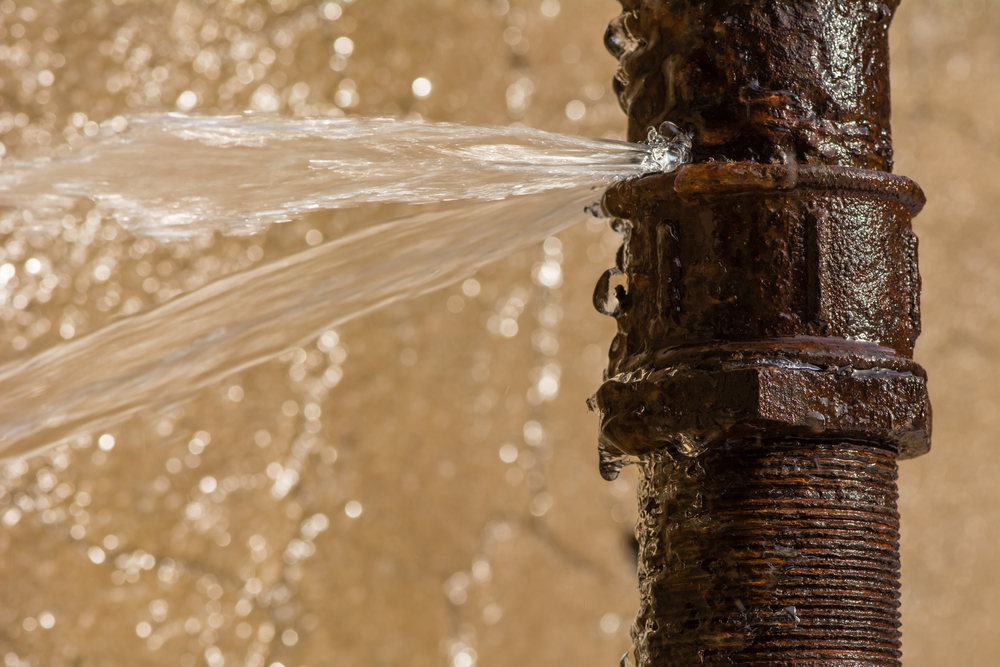
Rural properties in Millsap TX face water line challenges that suburban and urban homes simply do not encounter. Your water supply may travel 100 feet or more from a well or a Millsap Water Supply Corporation connection point to reach your house, running underground through soil that shifts with every season. That long run of buried pipe is exposed to freeze damage, root intrusion, ground movement, and corrosion for its entire length – and when something fails, it can be hundreds of feet from your front door. Professional water line repair and replacement on rural Millsap properties requires a plumber who understands these unique conditions.
Why Millsap Water Lines Fail
Most water lines on established Millsap properties were installed when the home was built, which for many properties in the area means the 1970s through 1990s. Homes from that era commonly used galvanized steel pipe for water supply lines – a material that corrodes from the inside out over 25 to 40 years, gradually narrowing the pipe diameter and eventually developing pinhole leaks or full breaks.
Newer homes often use copper or PEX, but even modern materials are vulnerable to Millsap’s soil conditions. The expansive clay and rocky limestone mix that characterizes western Parker County creates tremendous pressure on buried pipe during wet-to-dry soil cycles. A pipe that was properly supported at installation can end up spanning unsupported voids as the soil shrinks during drought, creating stress points that crack joints and fittings.
Properties on private wells face an additional risk: the supply line between the well head and the house often runs at a shallower depth than municipal connections. These shallow runs are more vulnerable to freeze damage during Millsap’s winter cold snaps, tree root interference, and accidental damage from fence post installation, driveway work, or livestock operations.
The Texas State Soil and Water Conservation Board documents the soil composition data for Parker County that directly contributes to these underground infrastructure challenges.
Warning Signs of a Failing Water Line
The most obvious sign is a sudden, dramatic drop in water pressure throughout your entire home. If every faucet and fixture loses pressure simultaneously, the supply line between your source and your house has likely developed a significant leak. But major breaks are not the only way water lines fail on Millsap properties.
Watch for unexplained wet areas, standing water, or unusually green patches in your yard along the path of your buried water line. If your water bill spikes without any change in household usage, water is leaking underground somewhere between the meter or well and your home. Discolored or rusty water from every tap in the house – not just the hot water side – indicates internal corrosion in the main supply line. And if you hear a constant hissing or running water sound when no fixtures are in use, that is pressurized water escaping through a crack.
For properties where the leak is not visible on the surface, professional water leak detection uses acoustic and electronic equipment to pinpoint the exact failure location without excavating your entire yard. Our detailed guide on how to locate water leaks underground explains the full detection process for rural properties.
Repair vs. Replacement on Rural Properties
When a water line fails on a rural Millsap property, the decision between spot repair and full replacement depends on the pipe material, age, and failure history. A single isolated leak on an otherwise healthy copper or PEX line is a straightforward spot repair – excavate the failure point, cut out the damaged section, splice in new pipe, and backfill.
Galvanized steel lines are a different calculation entirely. If you have a leak on a galvanized water line that is 30 or more years old, the corrosion that caused the leak exists throughout the entire length of the pipe. Repairing one spot almost guarantees another failure within months. Full replacement with modern PEX or copper is the only lasting solution and protects you from the cycle of repeated dig-and-repair costs.
For properties with particularly long runs – common on Millsap acreage properties – directional boring can install new water lines with minimal surface disruption. This trenchless method pulls new pipe through a bored path underground without excavating a trench across your entire yard, pasture, or driveway.
Freeze Protection for Millsap Water Lines
Millsap regularly experiences overnight temperatures in the low 20s and teens between December and February, and rare arctic events can push temperatures into single digits. Exposed water lines at well heads, along exterior walls, in crawl spaces, and at meter connections are all vulnerable.
Insulation foam on all exposed pipe, heat tape on the most vulnerable sections, and ensuring outdoor faucets are drained and shut off before the first freeze are baseline precautions every Millsap homeowner should take. If your property has a well, make sure the well house or well head enclosure is insulated and that any above-ground pipe between the well and the ground is protected.
The National Weather Service Fort Worth office provides freeze warnings and winter weather advisories that Millsap homeowners should monitor closely each winter season.
Your Millsap TX plumber at SNP Plumbing handles water line repair and replacement on rural properties throughout western Parker County. Contact us for a pressure test and line assessment before a small leak becomes a major excavation.